In this article
A calendar can reserve time, but it cannot guarantee that the time will be restful. That distinction matters when planning around shifts. A protected interval is a boundary against other commitments. It is not a health score, a diagnosis or proof that a particular schedule is safe. The practical aim is to make the boundary visible before everything else fills the day.
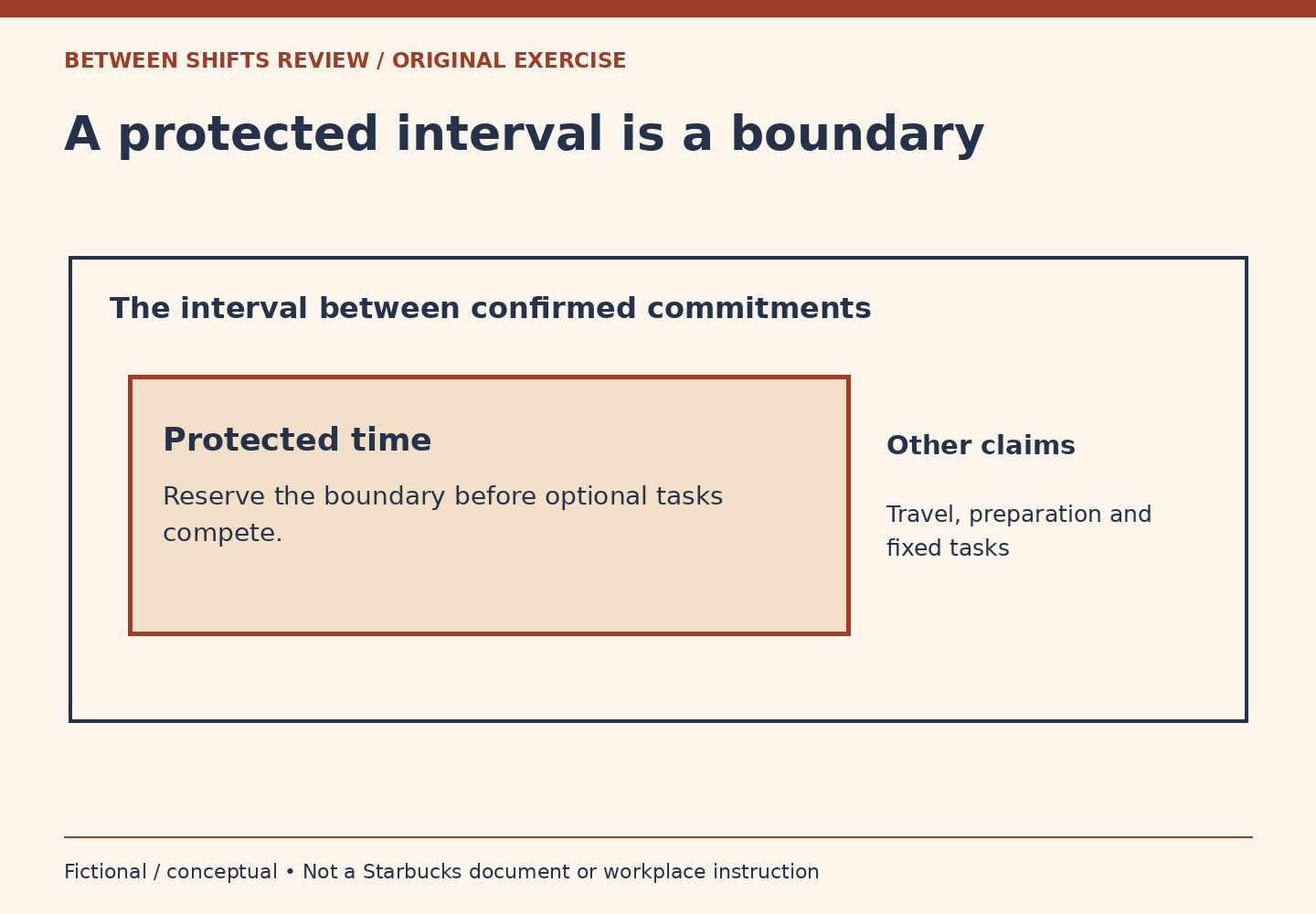
Reserve the interval before optional tasks
In an invented planning exercise, a person identifies a block they do not want ordinary errands to occupy. They then place travel, preparation and fixed commitments around it. If the plan does not fit, the conflict becomes visible early. The alternative is to add tasks first and quietly give whatever remains to rest.
The exercise does not prescribe the same number of hours for everyone or tell a reader how to manage a health condition. CDC’s sleep guidance emphasizes both sufficient sleep and sleep quality, and recommends discussing persistent sleep problems with a healthcare provider. Personal circumstances may need individualized advice beyond anything a calendar can supply.
Protect the boundary from disguised commitments
Some activities look small because they happen on a phone. A quick administrative task, a long message thread or an optional errand can still consume attention and time. Decide which of those can wait. Required work activity belongs under the applicable workplace expectations and work-time rules, not in an assumed pool of free personal time.
A fictional example helps: a household task is described as taking “only ten minutes,” but it requires travel and waiting. The actual claim is larger than the label. Ask for the whole commitment before agreeing. This is a planning conversation, not an argument that another person’s request is unimportant.
Separate what you control from what needs support
A quieter room, a revised personal routine or a moved errand may be within someone’s control. An unpredictable schedule, unsuitable housing or a health condition may not be. Avoid treating every difficulty as evidence that the person failed to plan well enough. NIOSH places occupational fatigue in a broader workplace context, involving both employers and workers.
If fatigue creates a safety concern, use the appropriate workplace or qualified support promptly. A positive result from the Shift Window Sketch cannot overrule how someone feels or certify fitness for a task. If driving is involved, follow reliable driving-safety guidance rather than using schedule pressure as a reason to continue unsafely.
Use observations without building a surveillance project
A private reflection can be simple: what prevented the intended interval, and is there one practical change worth considering? It does not require uploading sleep data, health information or workplace records to a website. This publication’s tool asks only for invented numbers and does not assess an individual’s sleep.
If a healthcare professional recommends keeping a record, follow their guidance about what to capture and how to share it securely. Do not substitute a generic internet template for individualized care. Similarly, do not collect colleagues’ fatigue observations or use a personal planning exercise to judge their performance.
Allow an honest mismatch
Sometimes the obligations do not fit. That is not a signal to make every assumption more optimistic until the calendar looks acceptable. Revisit the movable commitment, clarify the unresolved work question or seek the appropriate support. A plan that clearly exposes a mismatch is more useful than one that hides it in a smaller rest block.
Sustainable routines are allowed to be modest. The purpose is to reduce avoidable friction while preserving important boundaries. They cannot guarantee recovery, solve all scheduling problems or replace medical advice. A clear protected interval, a realistic account of the surrounding day and an appropriate route for concerns are better starting points than a score that promises certainty it cannot provide.
Sources and limits
About Sleep. Fatigue and Work. Public material checked October 8, 2026. The exercise and fictional details are original editorial work. This article does not establish Starbucks policy, an entitlement or an individual health or legal conclusion.