In this article
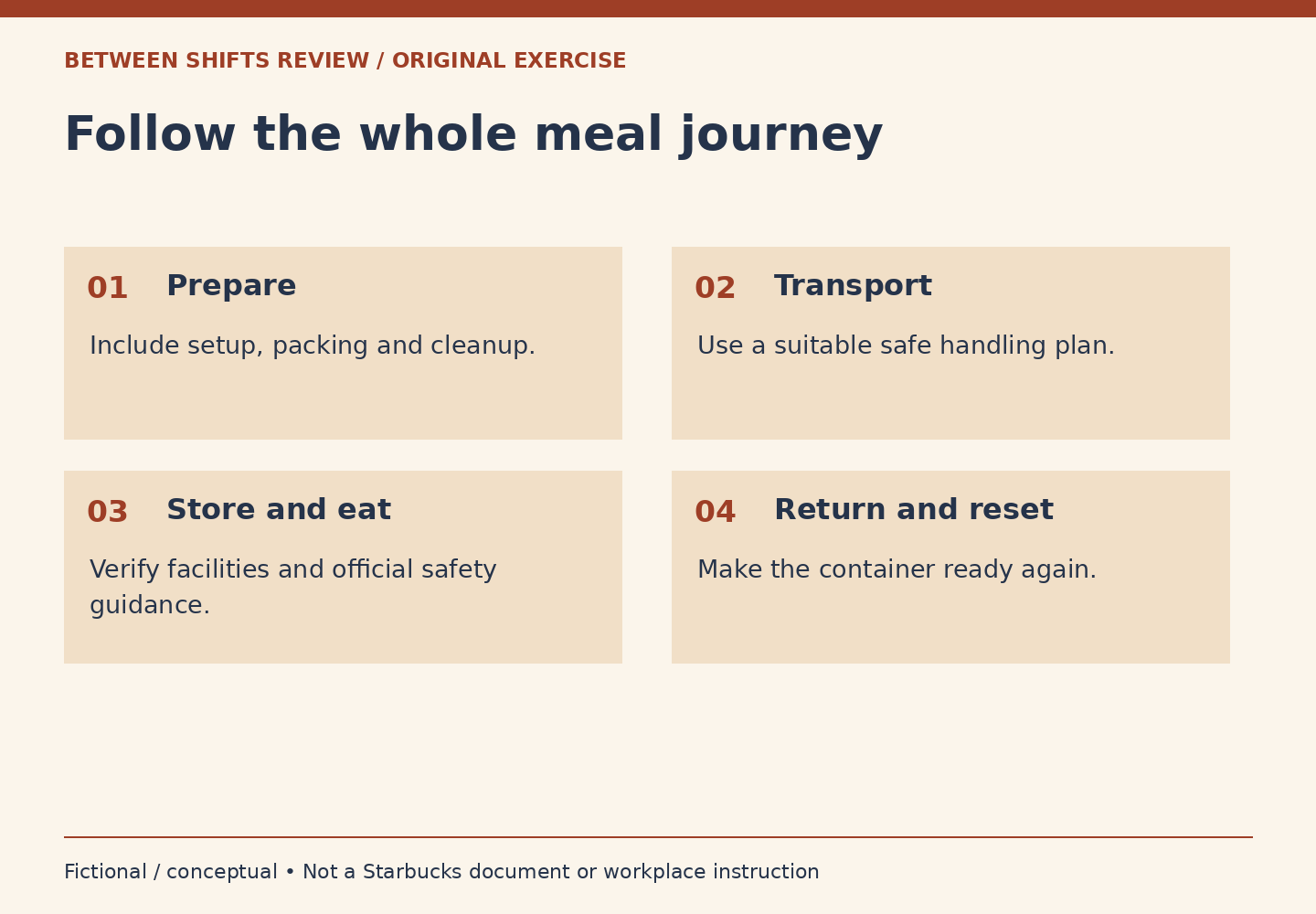
An appealing recipe can still be awkward on a working day. It may require a container that leaks, storage that is unavailable or more preparation than the preceding evening allows. A practical meal plan therefore follows the food from preparation to eating. The planning task is logistical. It is not a personalized diet, a promise of health benefits or permission to disregard food-safety instructions.
Start with what the day actually supports
For a fictional exercise, compare two options: a meal prepared at home and a meal assembled from components already available. Do not rank them by ambition. Ask what equipment, time, storage and eating arrangements each needs. A warm meal may be workable if reheating is available; otherwise, the plan needs a different safe approach. Confirm facilities rather than relying on memory of a different location.
USDA MyPlate’s planning guidance encourages matching meal preparation to available time and checking what is already on hand. That is useful context, but the four-stage worksheet in this article is original. It does not calculate nutritional requirements or decide what someone should eat. Preferences, allergies, access and personal health needs remain outside the exercise.
Treat preparation as a complete task
Preparation includes locating ingredients, cooking or assembling, cooling where required, portioning, cleaning and packing. A recipe’s cooking time is not the whole time claim. In the invented example, a twenty-minute cooking step also needs ten minutes for setup and packing. Those thirty minutes belong in the plan rather than disappearing because they are ordinary.
Choose a fallback that is genuinely simpler and suitable for your circumstances. It might use fewer components or require less equipment. “I will figure it out later” is not a fallback if later is exactly when time is scarce. Equally, elaborate weekend preparation is not automatically sustainable if it consumes a day needed for other priorities.
Follow the storage requirements
Transport and storage are food-safety questions, not just convenience questions. Use the relevant official guidance for the food and method involved. FoodSafety.gov’s charts provide cooking and storage references. This article deliberately does not invent a universal time limit or imply that a lunch bag, a cool room or food that looks normal proves safety.
Check the whole chain: how the food leaves home, how long the journey lasts, what storage is available and how it will be handled before eating. A change to the shift or commute can change that chain. If the storage plan is uncertain, resolve it with reliable guidance before relying on the food. Workplace food-handling requirements are separate and must be followed.
Include the unglamorous return
The container also comes home. Washing it, replacing a missing lid and making it ready again are small tasks that can derail repetition when ignored. Give those tasks a place in the routine. A plan that uses every suitable container on one day may create extra work for the next one.
A fictional two-day comparison might show that Option A takes more preparation but leaves a clean spare container, while Option B is faster today and requires washing tonight. Neither is universally better. The useful comparison is which demand lands in which part of the week. This is the same principle used in a small between-days reset.
Keep the plan modest enough to repeat
A sustainable routine survives an ordinary imperfect week. Try planning one or two workable combinations before attempting a detailed month. Review the part that failed: missing ingredient, unrealistic preparation time, unsuitable transport or unavailable storage. Change that part rather than treating the whole effort as a personal failure. For nutrition or medical questions, use qualified advice appropriate to your situation; this publication supplies only a way to organize the logistics.
Sources and limits
Make a Plan. Food Safety Charts. Public material checked October 8, 2026. The exercise and fictional details are original editorial work. This article does not establish Starbucks policy, an entitlement or an individual health or legal conclusion.